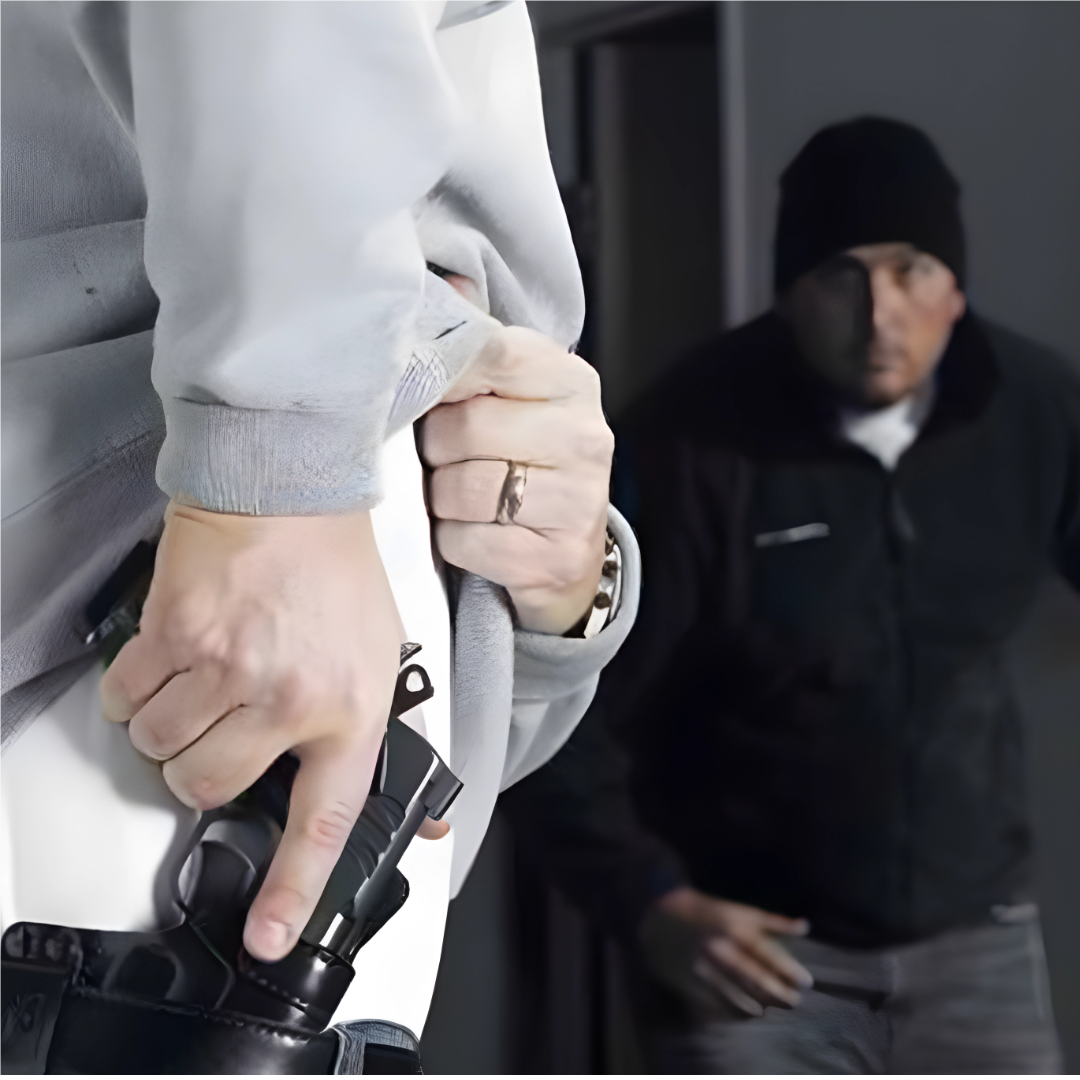
Should You Carry a Round in the Chamber? Safeties, Realities, and Building Confidence
Should you carry with a round in the chamber? Discover the truth about modern gun safeties, defensive reaction times, and how to build your carry confidence.
In almost every concealed carry class we teach at Marksmen Market, one question comes up without fail:
"Do you actually carry with a round in the chamber?"
It is usually followed by a second, closely related concern: "My gun doesn't have a manual safety switch—is it really safe to carry it loaded?"
These questions are completely natural. If you are new to concealed carry, walking around with a live round sitting directly in front of the firing pin can feel intimidating. However, confidence is built on understanding mechanical reality, not fear.
Here is our comprehensive breakdown of why carrying with a chambered round is the professional standard, how modern safety mechanisms actually work, and how you can safely build up to it.
The Reality of Self-Defense: Time, Hands, and Stress
Some carriers choose to leave the chamber empty and plan to rack the slide as they draw—a technique historically known as "Israeli Carry" or Condition 3. While it seems like a reasonable compromise, real-world defensive encounters reveal three major flaws with this approach:
1. You Will Not Have Enough Time
Defensive encounters happen in seconds, not minutes. The average self-defense shooting occurs at close range and resolves in under three seconds. The time it takes to draw, rack the slide, acquire your sights, and press the trigger can easily double your reaction time. In a critical moment, a fraction of a second can be the difference between stopping a threat and being overwhelmed.
2. You Might Not Have Two Hands Free
Racking a slide requires two hands. In a high-stress confrontation, your non-dominant hand may be occupied:
• Creating physical distance or fending off an attacker. • Holding onto a child or family member. • Disabled or injured during the initial onset of the attack.
If your off-hand is compromised, chambering a round under pressure becomes exceptionally difficult.
3. High Stress Causes Mechanical Failures
When adrenaline spikes, fine motor skills plummet. Racking a slide under extreme stress introduces high potential for human error, such as "short-stroking" the slide, which can cause a double-feed or jam when you need your firearm most.
"A Safety is a Mechanical Device That Can Fail"
In our classes, we teach a fundamental rule: a safety is a mechanical device that can fail. This truth applies in two distinct ways:
The Problem with Manual Safeties
Relying strictly on a manual thumb switch can create a false sense of security. Mechanical switches can wear down or fail, but more importantly, human error rises under stress. Shooters routinely forget to disengage a manual safety during a high-stress draw, or conversely, assume a safety is "ON" and handle a firearm carelessly. A thumb lever is never a substitute for strict gun safety rules.
Manual Safeties vs. Passive Safeties
When people say a modern striker-fired pistol (like a Glock, SIG Sauer P365, or Smith & Wesson M&P) "doesn't have a safety," they mean it lacks a manual external lever.
These firearms rely on passive internal safeties that operate automatically:
• Firing Pin Blocks: A physical steel block prevents the firing pin from moving forward. It only disengages when the trigger is pulled completely to the rear. • Drop Safeties: Internal shelf mechanisms stop the firearm from discharging if dropped or knocked. • Trigger Safeties: Integrated trigger levers prevent accidental movement from lateral force or inertia.
Because of these internal barriers, modern handguns are mechanically incapable of firing on their own.
Carrying Chambered Without a Manual Safety
If modern internal safeties keep the gun locked, what keeps the trigger from being pulled accidentally?
1. The Holster IS Your Primary Safety
When carrying without a manual safety switch, your holster acts as your physical barrier. A high-quality, rigid holster (made of Kydex or reinforced leather) completely encloses the trigger guard. If nothing can physically reach or press the trigger, the internal safeties remain engaged, and the gun remains completely safe while on your body.
2. Trigger Discipline
The most reliable safety mechanism in existence is keeping your index finger straight and off the trigger until your sights are on target and you have made the conscious decision to shoot.
3. Deliberate Re-Holstering
The vast majority of negligent discharges occur during re-holstering, not while walking or drawing. Always look your firearm back into the holster, ensure clothing, jackets, or drawstrings are clear of the opening, and slowly seat the weapon.
The "Ladder Method": Building Confidence at Your Own Pace
If carrying with a round in the chamber still makes you uneasy, do not force it on day one. Use this step-by-step progression to build trust in your equipment:
1. The "Empty Chamber" Test: Insert a full magazine into your firearm, but leave the chamber empty. Cock the action so the trigger is set, place the gun in your holster, and carry it around your house or during your normal daily routine. At the end of the day, unholster and check the trigger. You will find it is still set every single time, proving that your holster protects the trigger through all daily movement. 2. Practice with Snap Caps: Use inert dummy rounds (snap caps) to practice drawing, target acquisition, and administrative handling at home with zero risk. 3. Make the Switch: Once you verify that your holster completely secures the trigger guard through bends, twists, and daily activity, load a live round into the chamber with complete peace of mind.
Final Thoughts
Carrying a firearm for personal protection is a commitment to safety, mindset, and continuous training. While carrying unchambered is better than not carrying at all, understanding how modern firearms work will help you safely transition to full readiness. Respect your equipment, invest in a quality rigid holster, strictly obey the core rules of gun safety, and train until your handling is second nature.